SITUATION: Getting a library card — one of the most democratic services a community can offer — was needlessly complicated. The existing online process was slow, repetitive, and full of friction that discouraged completion, especially for new or less tech-savvy residents.
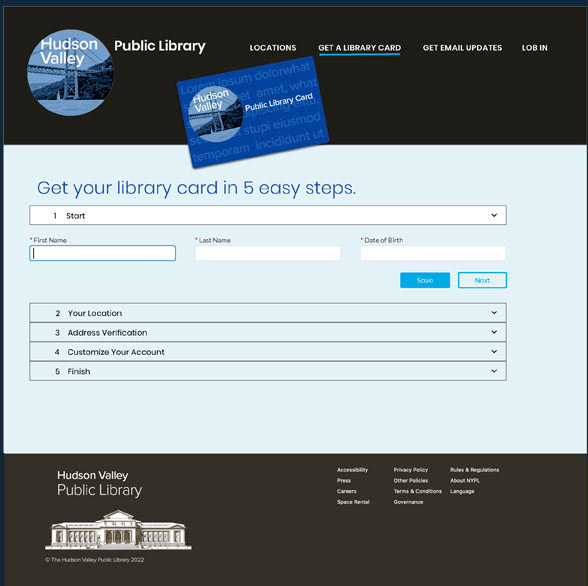
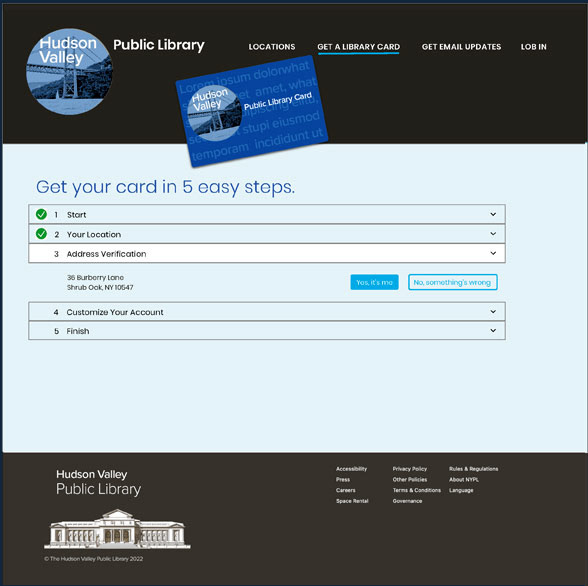
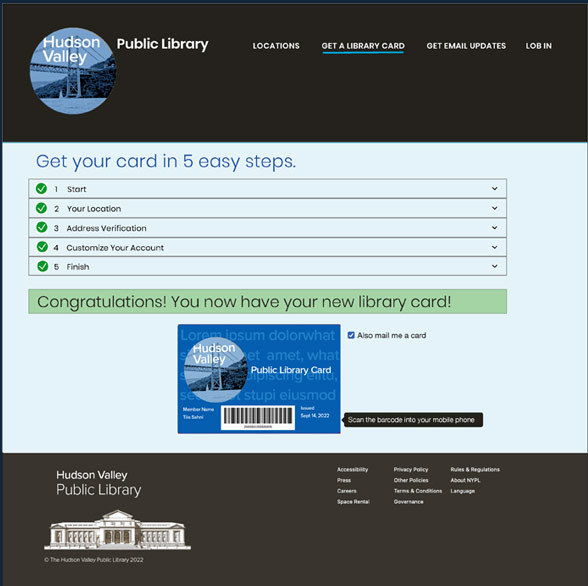
PROCESS: Representing the creative team in direct dialogue with the library, I started by auditing exactly what information could be pre-filled from existing user data — then redesigned the flow around that reality. Using React components and established UX best practices, I built an MVP prototype optimized for any device, with positive feedback loops at every stage of completion. The design was scoped for testing with diverse user groups to surface insights before any full build.
OUTCOME: The prototype demonstrated a dramatically simpler path to card registration — and established a design foundation the library can test, iterate, and scale as community needs grow.
PROCESS: Representing the creative team in direct dialogue with the library, I started by auditing exactly what information could be pre-filled from existing user data — then redesigned the flow around that reality. Using React components and established UX best practices, I built an MVP prototype optimized for any device, with positive feedback loops at every stage of completion. The design was scoped for testing with diverse user groups to surface insights before any full build.
OUTCOME: The prototype demonstrated a dramatically simpler path to card registration — and established a design foundation the library can test, iterate, and scale as community needs grow.